Click below to see a quick slideshow introduction to the history of the Haitian Revolution.
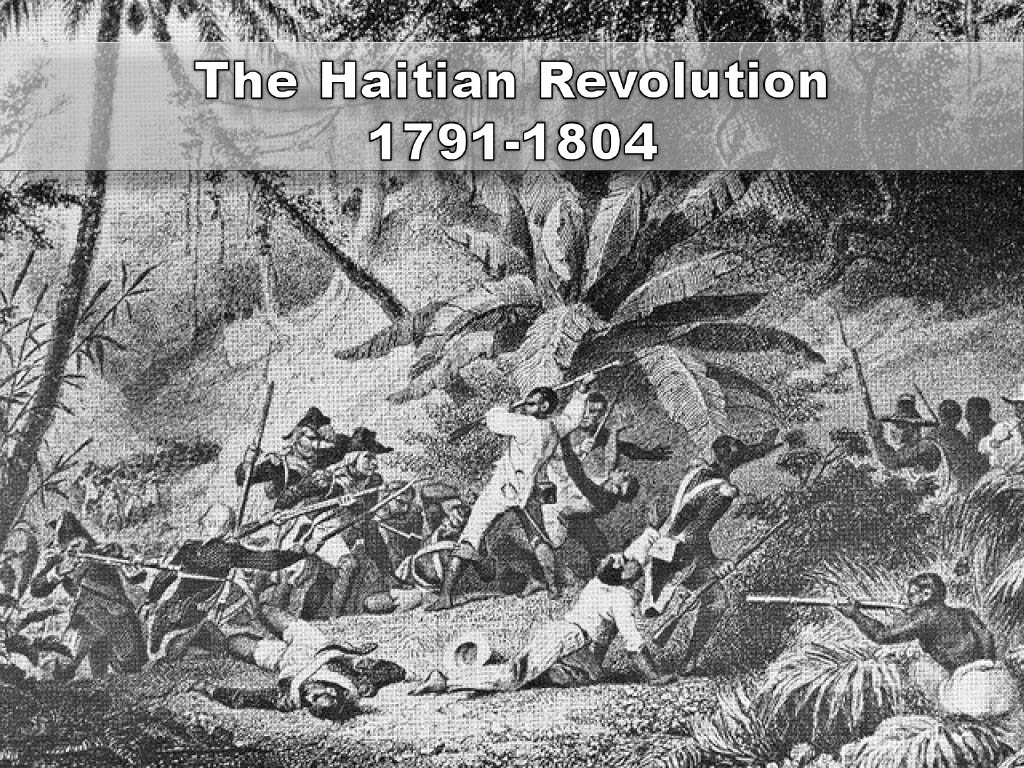
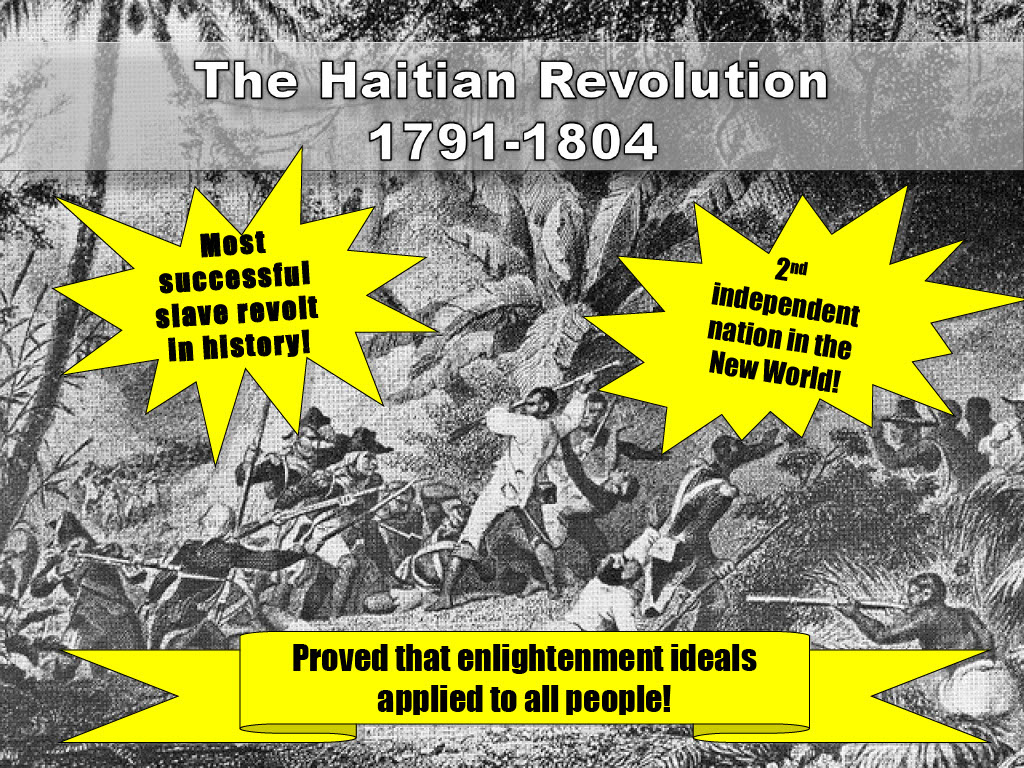
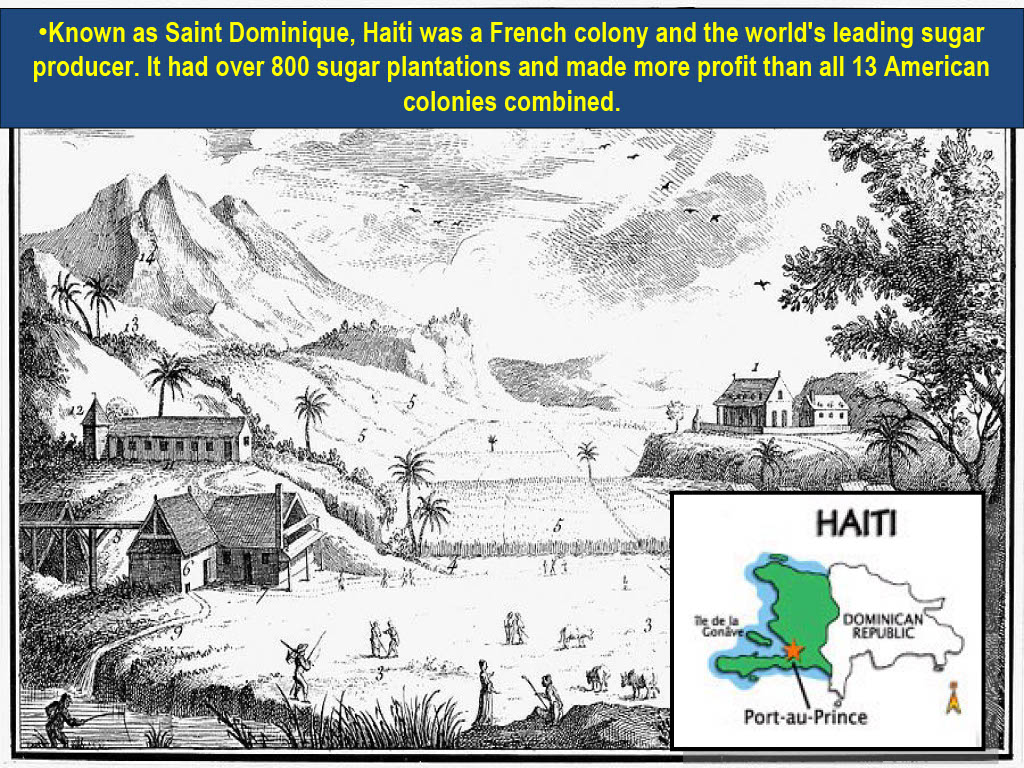
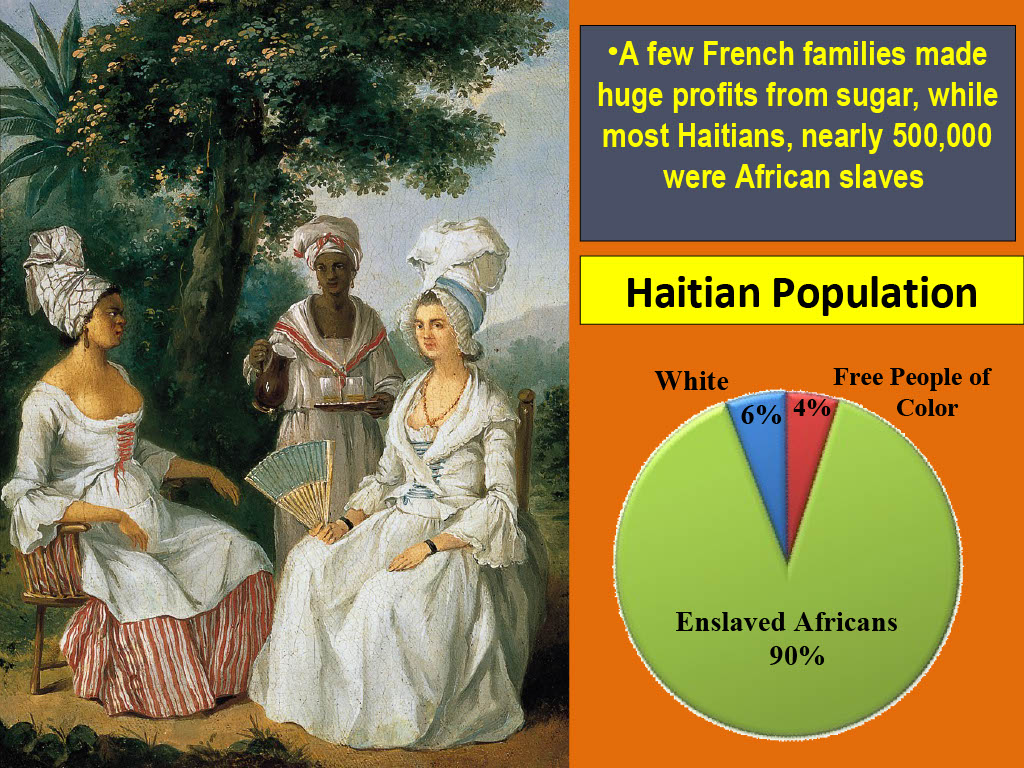

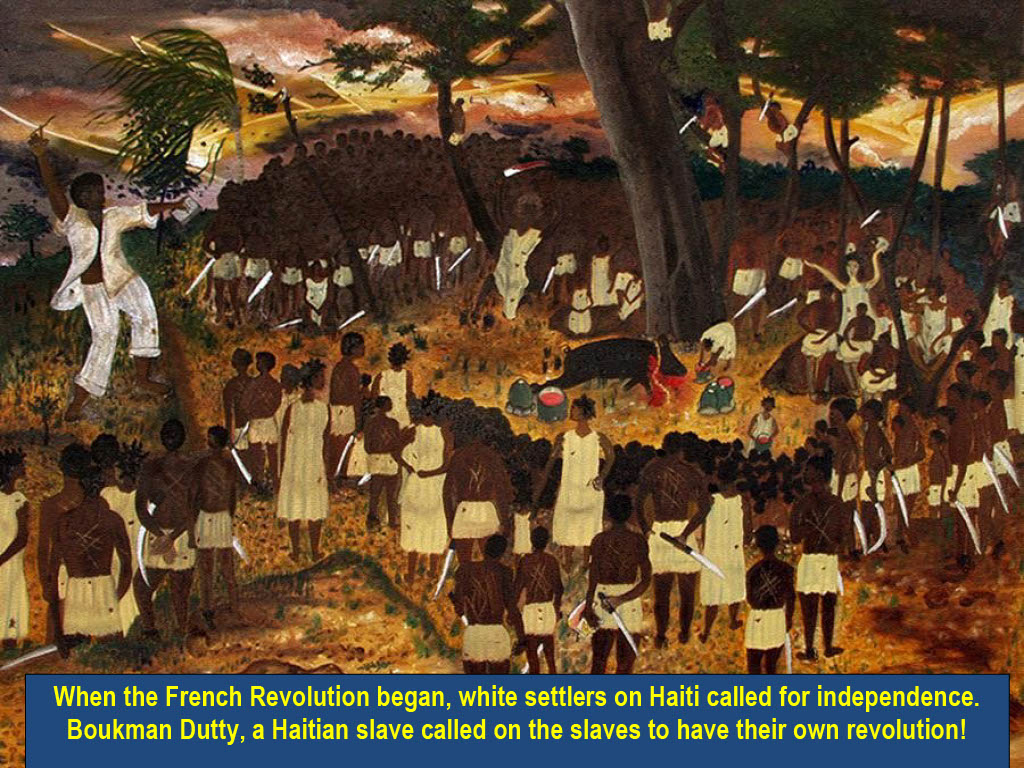
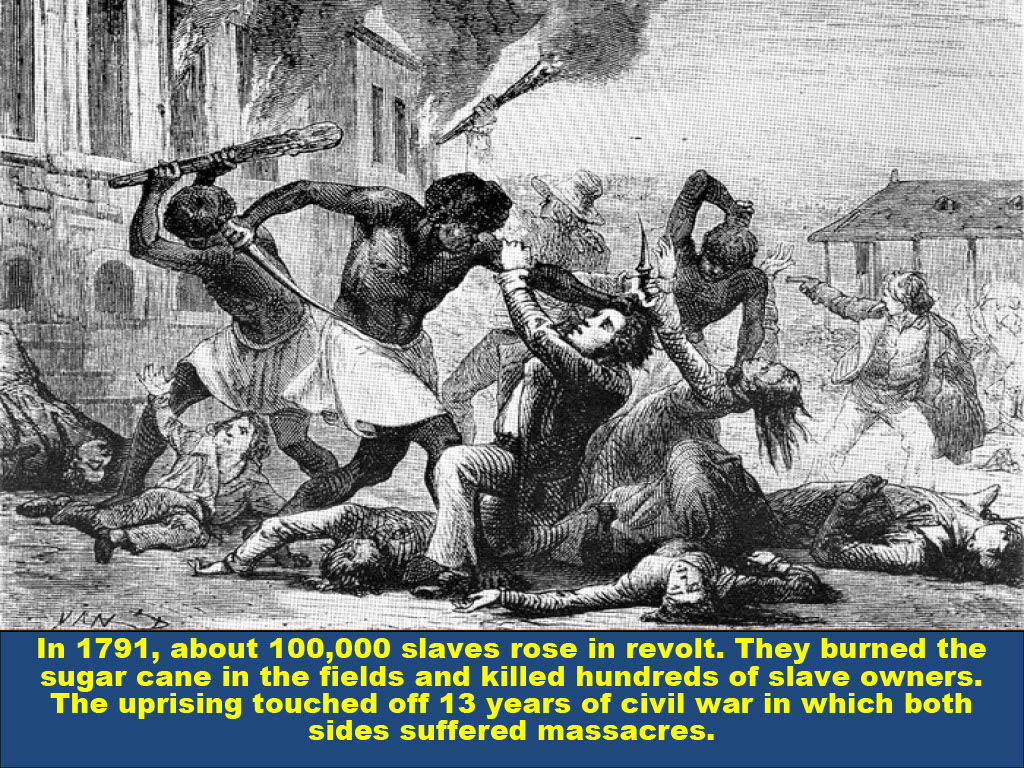
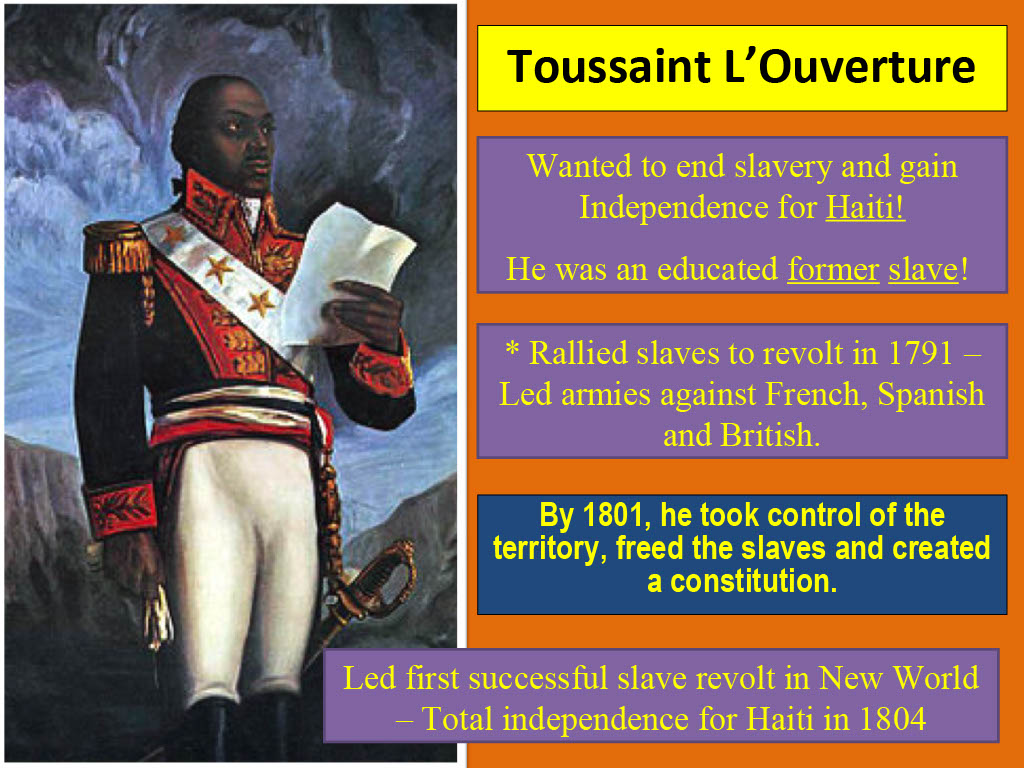

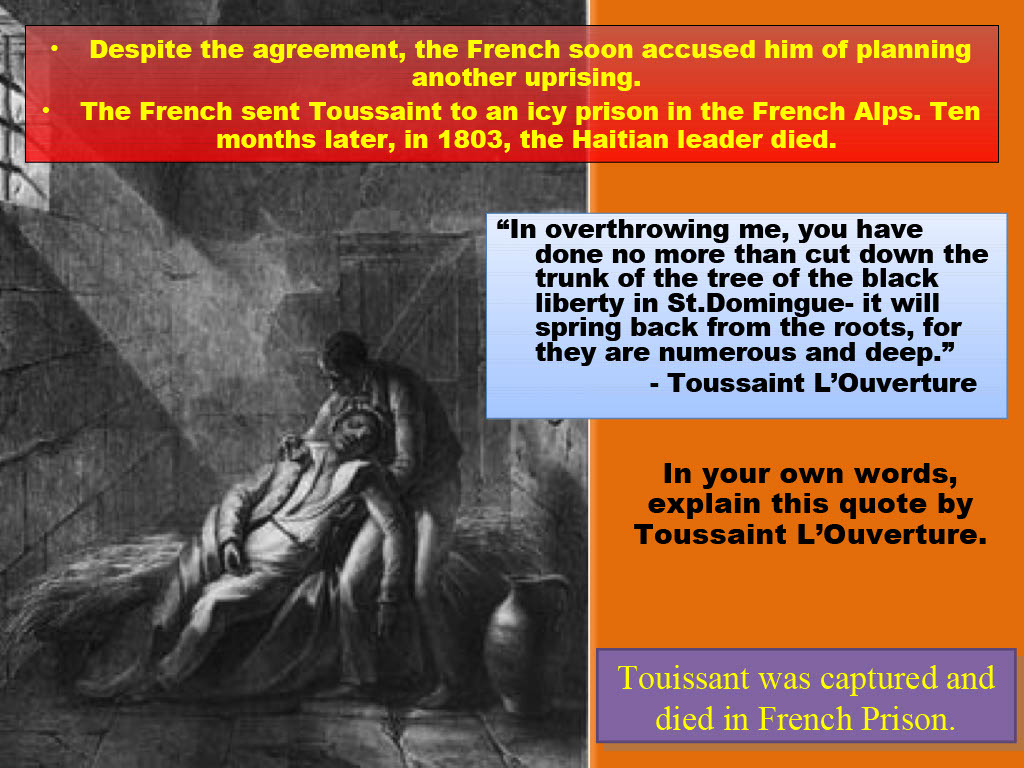
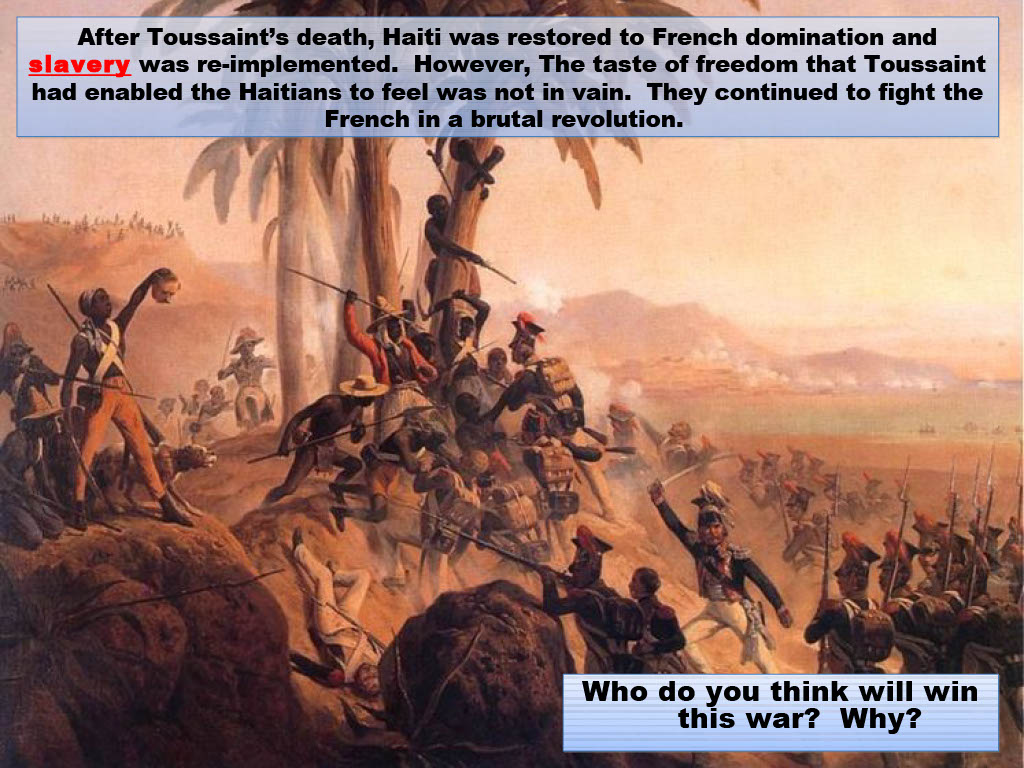
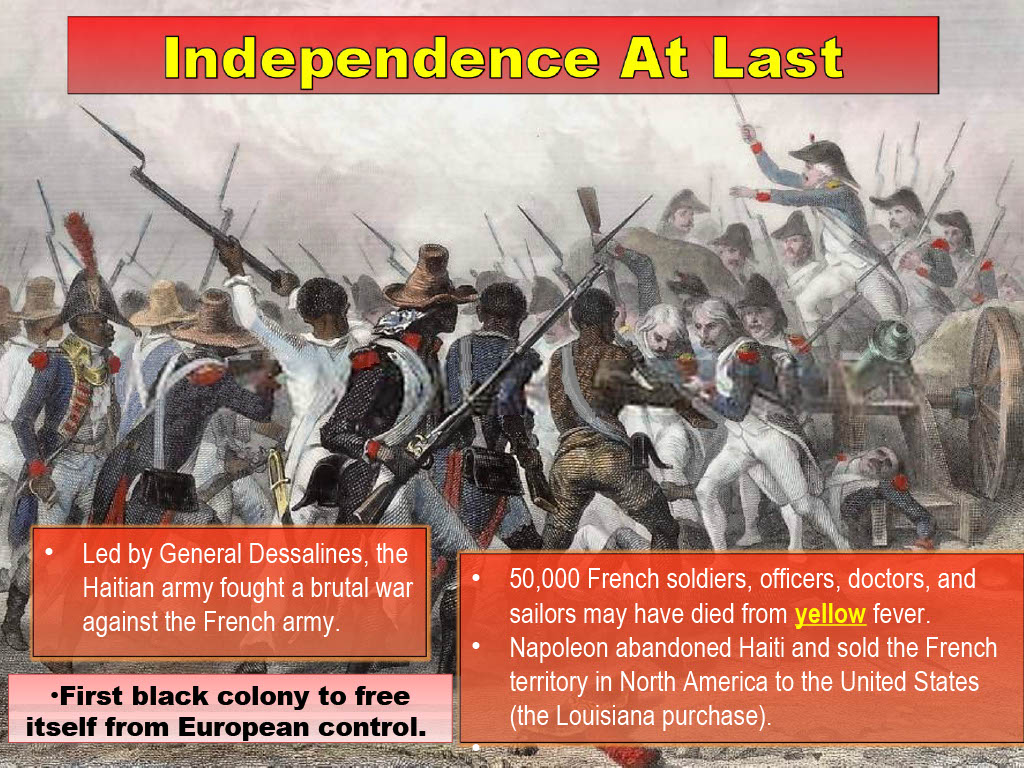
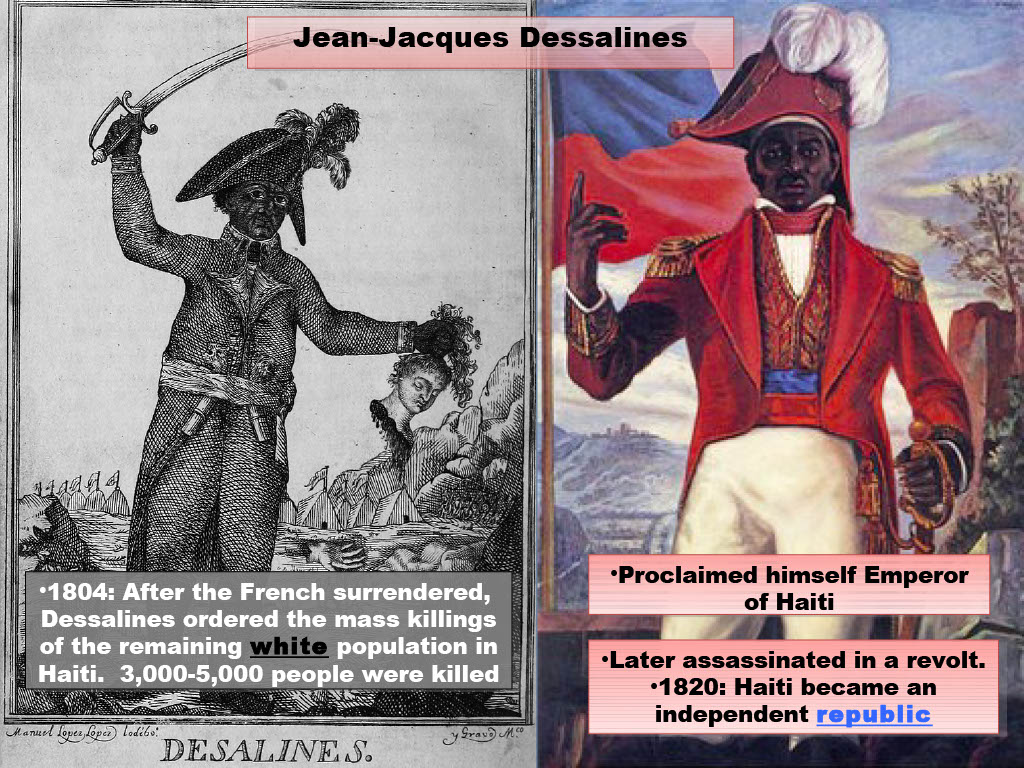
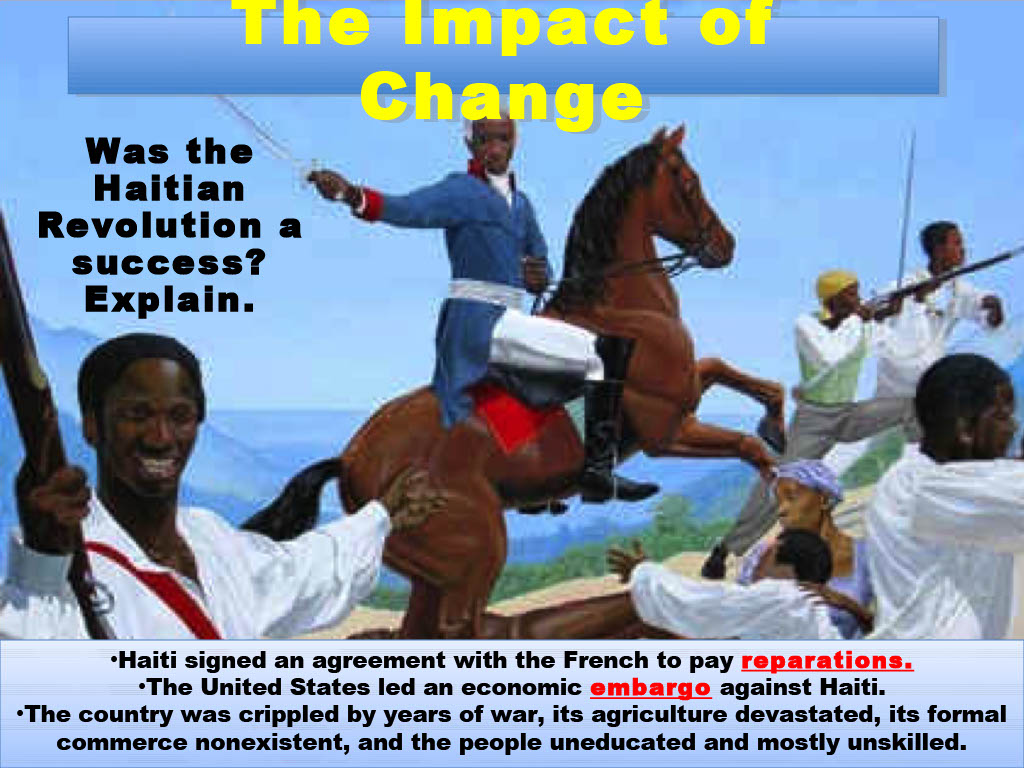

I believe that the Haitian Revolution deserves to be understood as one of the three great revolutions, alongside the American and French revolutions, that determined the course of world history in the 19th century. Though the Haitians had been loyal to the French Republic after the Republic outlawed slavery in 1794, Napoleon, desirous of reestablishing France’s empire in the Americas, tried to re-enslave the Haitians in 1802. Napoleon’s failure shocked the United States and the European powers. It is well-known that his failure in Haiti was the primary cause of the sale of the Louisiana Territory to the United States in 1803, but it was also the major factor that induced the United Kingdom to ban the slave trade in 1807, which led to the abolition of slavery itself in the Empire in 1833. It is true that there was moral opposition to slavery in the United Kingdom, but Parliament only acted when the successful slave revolt in Haiti threatened its sugar plantations in Jamaica, Barbados, and Trinidad (Britain made 5 times as much revenue from its Caribbean sugar islands than it did from the tobacco plantations in the North American colonies) (James, 1938).
Abandoning plans for an American empire, Napoleon focused on the European continent, taking on Austria, Prussia, and Russia. His stunning victories at Austerlitz (1805) and Jena (1806) remade Europe; to counter the Napoleonic threat, the old aristocracies of Europe adapted their militaries and societies, making them more modern, religiously tolerant, and meritocratic. Napoleon’s victories famously had a tremendous impact on the philosophy of Georg Wilhelm Friedrich Hegel, who was at Jena in 1806.
So, we can already say that the Haitian Revolution, by changing Napoleon’s focus from the Americas to Europe, had a major, but indirect influence on Hegel’s philosophy. The next page will explore the question of what Hegel knew about Haiti and whether the Revolution impacted his thought directly. You can go there now, or keep reading to see how the Revolution further influenced events in North and South America.
Haiti’s influence on the revolutions for independence in South America
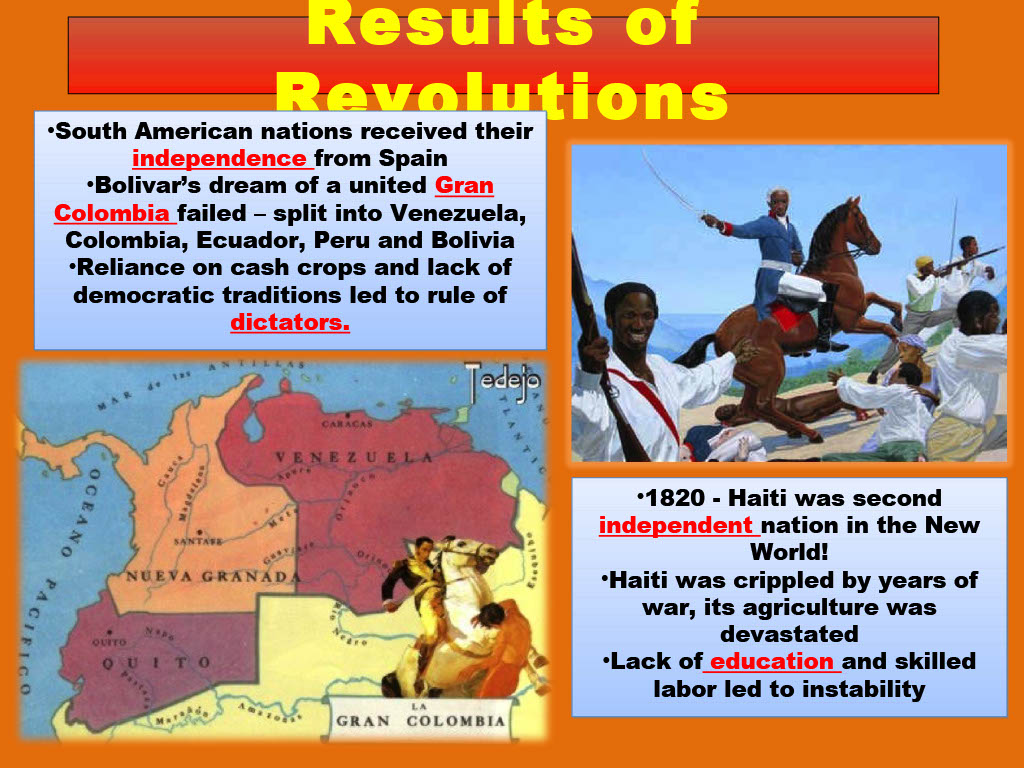
Simon Bolivar’s initial revolutions against the Spanish Empire failed because in part he had no coherent policy on emancipation of the Empire’s slaves. He sought asylum in Haiti in 1815, where he received assistance on the condition that he dedicate himself to the cause of emancipation. It was not lost on observers around the world that Bolivar was a failed revolutionary before he embraced abolitionism, and was a successful one after became an absolute abolitionist. He became the “Liberador,” ending slavery in what became Columbia, Venezuela, Ecuador, Bolivia, and Peru (Arana, 2013). Witnessing Bolivar’s victories in the 1820s, John Quincy Adams wrote in his journal that military victories would likely be the only way to truly end slavery in the southern American states. Bolivar’s conquests, and the emancipation that followed, would therefore serve as a model for Lincoln and the Emancipation Proclamation (Kaplan, 2014). It is not an exaggeration to say that the road to Gettysburg began with the victorious former slaves of the Haitian Revolution.
 Sean Murphy - Social Studies Teacher